BOOK REVIEW
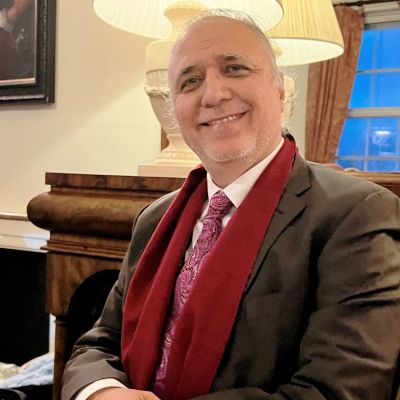
By TAHIR HAIDER WASTI, PhD (SOAS, University of London)
A Bloomsbury publication in association with the Institute of Ismaili Studies London
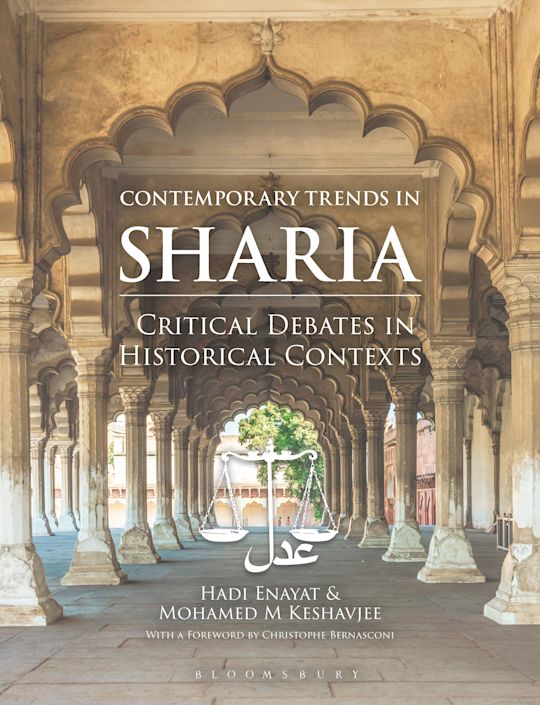
There is no shortage of books on sharia. Some focus on legal history, others on constitutionalism, human rights, gender, finance, or political Islam. What is less common is a work that attempts to bring these conversations together and examine them as part of a single intellectual landscape. This is precisely what Hadi Enayat and Mohamed M. Keshavjee seek to achieve in Contemporary Trends in Sharia: Critical Debates in Historical Contexts.
The book is ambitious in both scope and purpose. It ranges across constitutionalism, religious freedom, criminal justice, gender justice, alternative dispute resolution, human rights, Islamic finance, property rights, bioethics, and jihad. Such breadth inevitably carries risks. A specialist in any one of these areas will find questions that deserve further exploration. Yet it would be unfair to judge the book by what it does not attempt to do. Its purpose is not to provide the final word on any single subject. Rather, it seeks to demonstrate how these debates are interconnected and why they matter for contemporary understandings of sharia.
Readers familiar with Wael Hallaq’s scholarship may initially approach this volume expecting another historical study of Islamic law. That expectation would be misplaced. Hallaq’s major contribution was to reconstruct the history and structure of the classical legal tradition. Enayat and Keshavjee are concerned with a different question: what has become of that tradition in the modern world, and how are contemporary Muslims attempting to interpret, reform, defend, or reimagine it?
This concern with contemporary debates gives the book much of its vitality. Throughout the volume, the authors avoid the simplistic oppositions that often dominate public discussions of Islam and law. The familiar binaries of tradition versus modernity, religion versus secularism, and Islam versus human rights are shown to be inadequate. The reality, as the authors demonstrate, is far more complex. Contemporary debates involve jurists, constitutional theorists, human rights advocates, feminist scholars, state institutions, religious movements, and ordinary believers. Each approaches sharia with different assumptions regarding authority, legitimacy, and interpretation.
One of the aspects I found most interesting was the book’s engagement with reformist currents in modern Islamic thought. The influence of scholars such as Abdullahi Ahmed An-Na’im, Khaled Abou El Fadl, Mohammad Hashim Kamali, and others is evident throughout the work. Equally significant is the discussion of Mahmoud Mohamed Taha, whose influence is often acknowledged in specialised studies but less frequently integrated into broader discussions of contemporary Islamic legal thought. The authors do not treat these figures as marginal voices. Rather, they place them within the centre of ongoing debates concerning human rights, legal reform, and religious authority.
The chapter on human rights is particularly successful in this regard. Instead of asking whether Islam is compatible with human rights, the authors invite readers to consider deeper questions about universality, moral authority, and the relationship between legal traditions and modern political norms. The discussion is nuanced and avoids the defensive apologetics that sometimes characterise this area of scholarship. Similar strengths can be found in the chapters dealing with gender justice and constitutionalism, where the emphasis falls not simply on legal rules but on the interpretive frameworks through which those rules are understood.
The inclusion of female scholarly voices is another important strength of the volume. Contemporary discussions of sharia can no longer be confined to male juristic discourse alone, and the authors recognise this clearly. The engagement with scholars such as Amina Wadud, Asma Barlas, and Ziba Mir-Hosseini reflects an awareness that some of the most significant developments in modern Islamic thought are emerging through new forms of interpretive participation and ethical critique.
At the same time, the book raises questions that extend beyond its immediate subject matter. Perhaps the most important concerns authority. If the classical juristic tradition no longer occupies the uncontested position, it once held, who now possesses the authority to interpret and define sharia? Is that authority located in scholars, states, courts, constitutions, communities, or individual believers? The book repeatedly returns to this issue, although it wisely resists offering simplistic answers. In many respects, this unresolved question forms the intellectual thread connecting the volume’s diverse chapters.
Enayat and Keshavjee’s creative approach in this book also prompted me to reflect on how their endeavour might complement my own earlier work on criminal justice in Pakistan in The Application of Islamic Criminal Law in Pakistan: Sharia in Practice, which examined the operation of Islamic criminal law within courts, legal institutions, and the practical realities of the Pakistani justice system. Whereas my study adopted a largely empirical approach, Enayat and Keshavjee focus on the intellectual and ethical debates that shape contemporary understandings of sharia. The two perspectives are, in many respects, complementary. One is concerned primarily with how Islamic law operates in practice, while the other explores how it is debated, contested, and reconstructed in contemporary thought. Taken together, they shed light on different dimensions of the same phenomenon.
What remained with me after reading the volume was not any single argument, but a series of questions. Can a maqasid-centred approach provide a sufficiently robust foundation for legal reform? How should Muslim societies negotiate the relationship between inherited legal traditions and evolving ethical concerns? Where should interpretive authority reside in an age characterised by competing claims to religious and legal legitimacy? These questions are not fully resolved, but that is perhaps the point.
The authors wisely resist simplistic answers. Some works on Islamic reform seek to resolve these tensions too quickly. Contemporary Trends in Sharia performs a different and arguably more valuable function. It identifies the questions that contemporary scholarship must continue to confront.
What also emerges clearly from the volume is that contemporary scholarship on sharia has entered a new phase. Earlier generations often focused on defending or criticising Islamic law as a fixed system. The contemporary discourse is considerably more complex. It concerns methodology, authority, constitutionalism, pluralism, ethics, and the practical realities of law within modern state structures. Enayat and Keshavjee succeed in capturing this transition exceptionally well.
For that reason, the lasting significance of Contemporary Trends in Sharia may lie less in the answers it provides than in the agenda it establishes for future scholarship. The authors have identified many of the most important questions confronting contemporary Islamic legal thought and have brought them together within a coherent intellectual framework. Future researchers will undoubtedly continue to debate these issues, but they will do so on foundations that this volume has helped to clarify.
If Hallaq reconstructed the history of Islamic law, An-Na’im articulated one influential vision of reform, and The Application of Islamic Criminal Law in Pakistan: Sharia in Practice explored the operation of sharia within modern legal institutions, then Enayat and Keshavjee have mapped the contemporary intellectual landscape in which these debates now unfold. Their contribution lies not simply in advancing particular arguments, but in identifying the questions that are likely to shape the next generation of scholarship.
That, in itself, is a significant scholarly achievement.
Reviewed by TAHIR HAIDER WASTI, PhD